
ColdGenius vs PhantomBuster at a glance
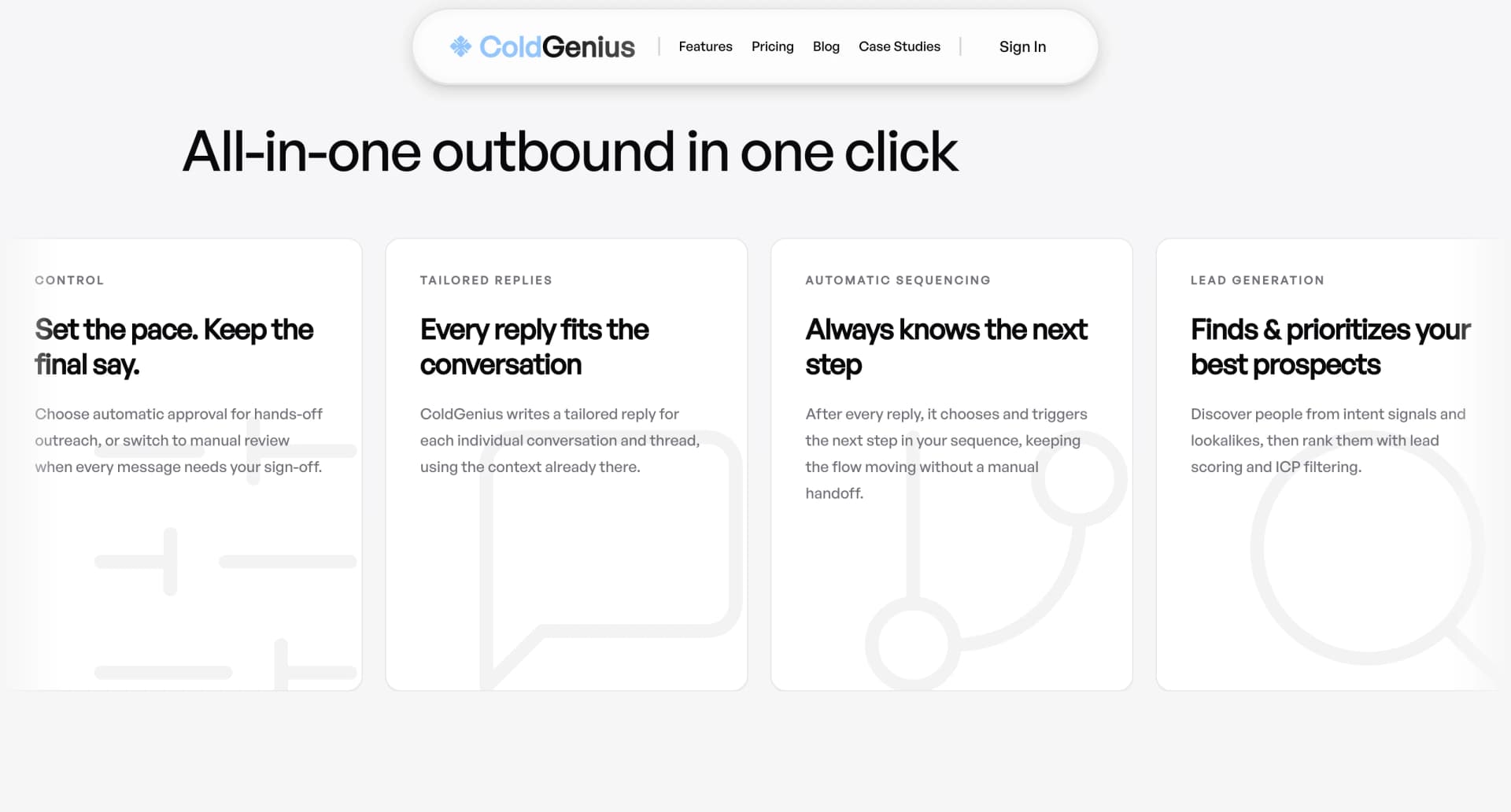
You need qualified conversations, not another pile of automation parts. ColdGenius gives your team a ready-to-run GTM agent: define your ideal customer profile, connect sender accounts, approve the campaign, and keep email and LinkedIn activity moving from one system. The result is a shorter path from a signal to a useful reply.
PhantomBuster is built around modular Phantoms and Workflows. Its official product and pricing pages describe a library of automations that you assemble, schedule, and operate with shared execution time, slots, and credits. That flexibility can be valuable when you want to design a custom extraction or enrichment process. It also means your team owns the joins between discovery, filtering, outreach, approvals, and response handling.
For a technical GTM buyer, that distinction is the decision. ColdGenius is the stronger fit when the outcome is a managed prospecting motion rather than a collection of scripts.
Where the operational cost appears
Assembly comes before outreach
PhantomBuster lets you run different Phantoms for actions such as finding profiles, extracting results, and enriching records, then connect them in a Workflow. The official pricing explanation says multi-step Workflows consume execution time and slots according to the activity of their steps. Your team therefore has to design the sequence, pass data between steps, monitor resource consumption, and troubleshoot a failed handoff before a prospect receives a message.
ColdGenius starts with the buyer outcome. Its ICP scoring and filtering turn your targeting rules into a campaign audience, while intent signals and lookalikes help prioritize accounts worth attention. Instead of maintaining a chain of exports and scheduled jobs, you get a campaign control surface where the audience, senders, approvals, and conversations belong to one operating flow.
Capacity can become a planning problem
PhantomBuster’s published plans meter execution hours, active automation slots, and credits for tasks such as email discovery, URL Finder lookups, AI steps, and CAPTCHA solving. The Start plan is listed with 20 hours, five slots, and 500 email credits; the Grow plan with 80 hours, 15 slots, and 2,500 email credits. When execution time runs out, the official pricing page says automations pause until the next cycle or an upgrade. That makes workflow design and volume forecasting part of day-to-day campaign management. PhantomBuster pricing also makes the capacity model visible before you commit. A builder must estimate how often each Phantom runs, how many active slots the assembled motion occupies, and whether enrichment credits remain available. That work is reasonable for a custom automation program, but it competes with the hours your team could spend reviewing accounts, testing messages, and responding to buyers. ColdGenius shifts that attention toward campaign decisions and commercial conversations. You still retain control over who enters the audience and when messages send, while the agent carries the repeated coordination.
ColdGenius keeps your planning focused on pipeline. You can configure sender accounts, use automatic or manual approval, coordinate email and LinkedIn, and see the work in a unified inbox. Those controls reduce the number of separate resource counters your operator must reconcile before deciding what to launch next.
Data collection is not the same as follow-through
A scraper can produce a useful list. A GTM motion must decide who is a fit, select a safe sender, tailor the first touch, follow up with context, and route the response. PhantomBuster’s public materials center on Phantoms, Workflows, exports, APIs, and usage resources. They do not state that the public Start plan includes ColdGenius’s unified inbox, sender-account handling, or tailored reply context. That narrower distinction matters: adding those steps yourself creates more systems to own and more places for context to disappear.
ColdGenius includes enrichment and integrations alongside ICP scoring, email and LinkedIn coordination, and reply handling. Your team can keep a prospect’s qualification context attached to the conversation and choose automatic or manual approval before activity goes live. That is the difference between collecting a record and progressing an opportunity.
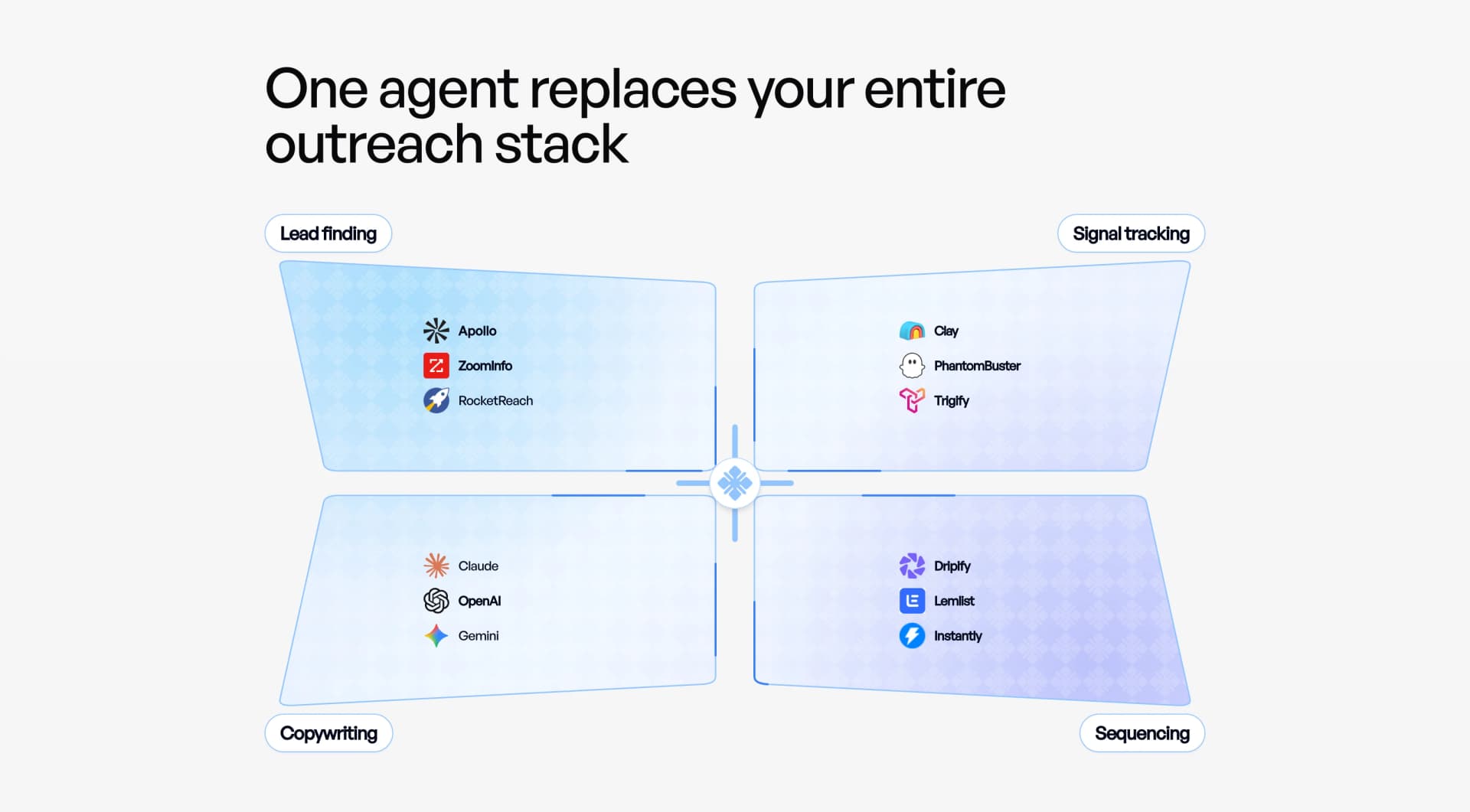
Feature comparison
| Feature | ColdGenius | PhantomBuster |
|---|---|---|
| Intent signals and lookalike targeting | ✓ | — |
| ICP scoring and filtering | ✓ | — |
| Ready-to-run GTM agent | ✓ | — |
| LinkedIn and email coordination | ✓ | — |
| Sender accounts handled in campaign setup | ✓ | — |
| Automatic and manual approvals | ✓ | — |
| Tailored reply context | ✓ | — |
| Unified inbox | ✓ | — |
| Modular LinkedIn Phantoms | — | ✓ |
| Composable multi-step Workflows | — | ✓ |
| CSV or JSON export and API access | — | ✓ |
✓ Included. — Not included in PhantomBuster's public Start plan. Custom plans may differ.
Why this matters for pipeline
Every handoff in a prospecting system has a cost. A list exported from a Phantom may need normalization. A qualified account may need to be routed to the right sender. A response may live in a separate inbox from the record that explains why the prospect was targeted. Those costs show up as slower launches, harder troubleshooting, and manual work that does not create customer value.
ColdGenius gives you a single campaign path. Start with the account characteristics that define your ICP. Add intent signals or lookalikes to focus the audience. Enrich records and coordinate email with LinkedIn. Assign sender accounts, choose approval mode, and let the agent keep reply context available as prospects answer. You can read the practical role of signal-based targeting in ColdGenius buying signals, then connect it to the operating model described in campaign orchestration.
This is a measurable buyer benefit: fewer tools to stitch together and less time spent asking which step ran, which sender owns the thread, or where the latest qualification decision was recorded. ColdGenius’s approach has produced a $150K qualified pipeline outcome in the RTX case study and a $10K day-one sale in a separate customer story. Those examples show the kind of commercial result the workflow is designed to support, without asking you to treat a scraping output as pipeline by itself.
How to evaluate the move
- Write the target definition. Capture your ICP, buying triggers, exclusions, and the account context your team needs before outreach. ColdGenius uses scoring and filtering so the agent can apply that definition consistently.
- Choose the motion. Decide where email and LinkedIn should coordinate, which sender accounts are available, and whether launch approval is automatic or manual. ColdGenius puts those decisions in campaign controls rather than requiring a new Workflow for each join.
- Run a focused cohort. Start with a small, high-fit audience and inspect qualification, message context, and replies in the unified inbox. This validates the commercial path before you scale activity.
- Measure conversations. Review qualified replies and pipeline movement, not only execution hours, extracted rows, or export counts. Keep the workflow that produces useful conversations and remove manual steps that only move data.
If you currently use PhantomBuster, you do not need to discard valuable research. Preserve relevant account data, then move qualification, sender setup, approvals, coordinated touches, and reply context into ColdGenius. The migration goal is fewer operational joins, not a larger automation bill.
FAQs
Can ColdGenius replace PhantomBuster?
ColdGenius can replace the prospecting workflow when your priority is a ready-to-run GTM agent with ICP targeting, sender setup, coordinated email and LinkedIn activity, approvals, and reply handling. ColdGenius keeps research, qualification, outreach, and reply context in one commercial workflow, so your team can act on qualified accounts without adding another handoff. Evaluate the handoff cost: if your team spends more time assembling and supervising steps than acting on qualified replies, ColdGenius is the more direct path.
Does ColdGenius scrape every source PhantomBuster supports?
ColdGenius is designed around GTM execution, not a promise to reproduce every Phantom or source. Its verified strengths are intent signals and lookalikes, ICP scoring and filtering, enrichment and integrations, sender accounts, cross-channel coordination, approvals, and reply context. Map the sources you truly need to your pipeline goal instead of paying to reproduce unused automation breadth.
How does ColdGenius handle safety and control?
You control sender accounts and approval mode, and you can inspect campaign activity and replies in one inbox. That gives operators a clear checkpoint before outreach and a clear place to work responses. It also avoids treating raw execution capacity as the primary measure of GTM quality.
What should a technical GTM team do first?
Define one ICP cohort, connect the sender accounts you intend to use, and launch with manual approval. Inspect the fit and reply context, then expand to automatic approval when the motion is proven. Start your evaluation through the ideal customer profile playbook and keep the first cohort narrow enough to learn quickly.