
ColdGenius vs Closely: Which outbound workflow fits intent-led growth?
Outbound teams need two things at once: a credible reason to contact someone and a reliable way to follow up. Closely brings LinkedIn and email automation, enrichment, AI personalization, analytics, inbox collaboration, and CRM integrations into one product. ColdGenius starts one step earlier. It reads your offer, identifies the prospects showing relevant intent, scores them against your ICP, and coordinates a contextual campaign across channels.
That difference changes your team's economics. Closely is strong when you already have a list and want to automate sequences. ColdGenius is the better operating choice when the costly work is deciding who deserves attention, supplying the right context, and getting every sender moving without a maze of setup and handoffs.
The practical verdict
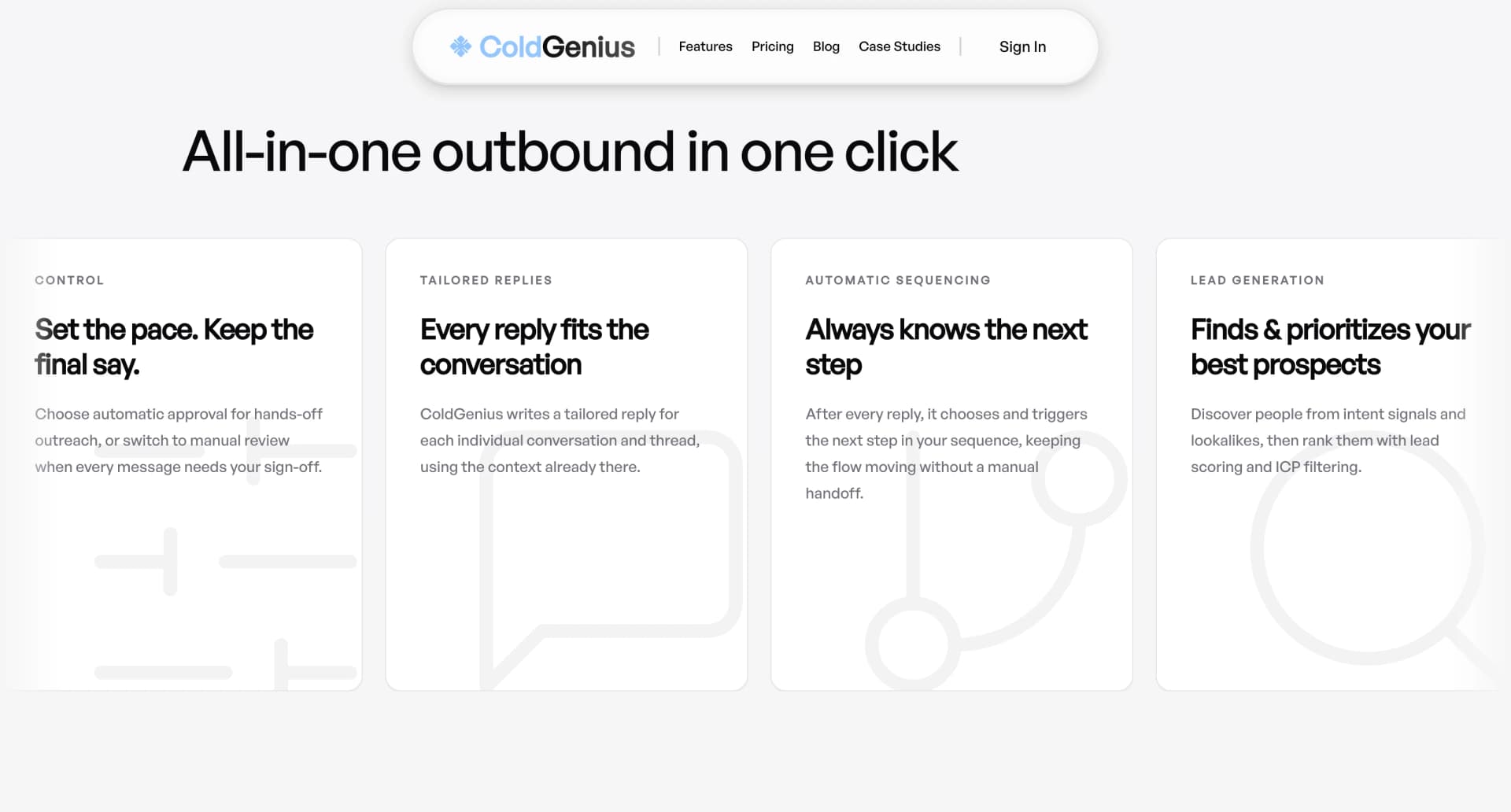
Choose ColdGenius for an intent-led path from signal to qualified conversation. ColdGenius offers ICP scoring and filtering, lookalike discovery, email and LinkedIn coordination, managed sender accounts, automatic or manual approvals, tailored reply context, a unified inbox, enrichment, and integrations. You get a campaign your team can inspect before it sends, rather than a sequence that only becomes useful after someone has already done the targeting and research.
Closely's official product page offers a capable automation stack: connection requests, profile visits, LinkedIn follow-ups, email steps, AI-personalized messages, A/B tests, a unified inbox, team assignments, and CRM sync. Its public pricing lists Starter at $49 per month with one LinkedIn account and unlimited email accounts; Growth is $127 per month with three LinkedIn accounts and 3,000 monthly credits. ColdGenius focuses your budget and operator time on finding and converting the right accounts instead of expanding sender infrastructure first.
Where the workflows diverge
1. Finding buying context before outreach
Closely's data layer can export from Sales Navigator, LinkedIn posts, and LinkedIn events, and its higher public plans list live LinkedIn scraping, email finding, and phone finding. Those are useful ways to enrich a defined prospect set. The operational question remains yours: which signal means a prospect is worth a conversation now?
ColdGenius gives you intent signals and lookalikes, then filters and scores contacts against your ICP. That removes the spreadsheet pass between research and campaign creation. Your team can spend its research budget on accounts with a reason to engage, while the agent supplies the relevant company and role context for the message.
2. Coordinating channels around one reason to reply
Closely's public pages list multichannel campaigns, conditional sequences, unlimited campaigns, LinkedIn and email campaigns, and AI-generated personalization. That is a strong execution toolkit. It can still leave teams responsible for translating a signal into a coherent narrative across a connection request, an email, and a follow-up.
ColdGenius coordinates email and LinkedIn touches around the same intent context. It can tailor the opening, preserve the reason for contact, and keep the follow-up connected to the prospect's situation. You avoid separate copy queues and reduce the chance that one channel says something unrelated to the other.
3. Launching sender infrastructure without a second project
Closely's Starter pricing is organized around one LinkedIn account, while its pricing page describes one sender as one LinkedIn account plus one email inbox. Its plans also advertise LinkedIn warmup, dedicated residential IPs, unlimited email accounts, Gmail and Outlook OAuth, and custom SMTP. That gives operators meaningful control, but scaling still means managing accounts, inbox connections, limits, and campaign readiness.
ColdGenius handles sender accounts for you. Managed senders and built-in approvals give your team a faster launch path without making one operator the owner of every account credential and deliverability checklist. Automatic approval can keep approved work moving; manual approval lets you inspect messages and targeting before the first send. The result is control where it affects brand risk, without turning infrastructure into your team's main task.
4. Turning replies into useful next actions
Closely promotes a Smart Inbox that combines DMs, InMails, and email replies, with assignments, tags, templates, and teammate-presence protection. It also lists team management and CRM integrations. Those controls help a team avoid duplicate handling, but an inbox alone does not decide what a reply means or what context the next response needs.
ColdGenius gives you a unified inbox plus tailored reply context. Positive replies can be handled with the original intent, account details, and campaign rationale in view. That makes the handoff from automated touch to human conversation shorter and gives the rep a clearer next action. Read One Inbox for All Your Replies for the workflow behind that benefit.
Feature matrix
| Feature | ColdGenius | Closely |
|---|---|---|
| Intent signals and lookalike discovery | ✓ | — |
| ICP scoring and filtering | ✓ | — |
| LinkedIn outreach automation | ✓ | ✓ |
| Email outreach campaigns | ✓ | ✓ |
| Email and LinkedIn coordination | ✓ | ✓ |
| AI message personalization | ✓ | ✓ |
| Managed sender accounts | ✓ | — |
| Automatic or manual campaign approval | ✓ | — |
| Unified reply inbox | ✓ | ✓ |
| Contextual reply assistance | ✓ | — |
| Enrichment and CRM integrations | ✓ | ✓ |
| Team workflow controls | ✓ | ✓ |
✓ Included. — Not included in Closely's public Starter plan. Custom plans may differ.
What this means for your operating cadence
Intent-led targeting also improves the weekly review. Instead of asking how many contacts entered a sequence, your team can ask which signals produced qualified replies, which ICP traits appeared in those accounts, and which follow-up context moved a conversation forward. ColdGenius keeps those decisions close to the campaign, so messaging, sender choice, and reply ownership can change from evidence rather than from a static export.
That matters for a technical GTM team with a small number of sellers. A rep should not spend Monday building a list, Tuesday connecting inboxes, and Wednesday reconciling LinkedIn replies with email threads. ColdGenius handles the repetitive campaign mechanics while preserving approval points for the decisions that affect positioning and reputation. Managers gain a reviewable workflow; sellers gain more time for conversations that have a reason to exist.
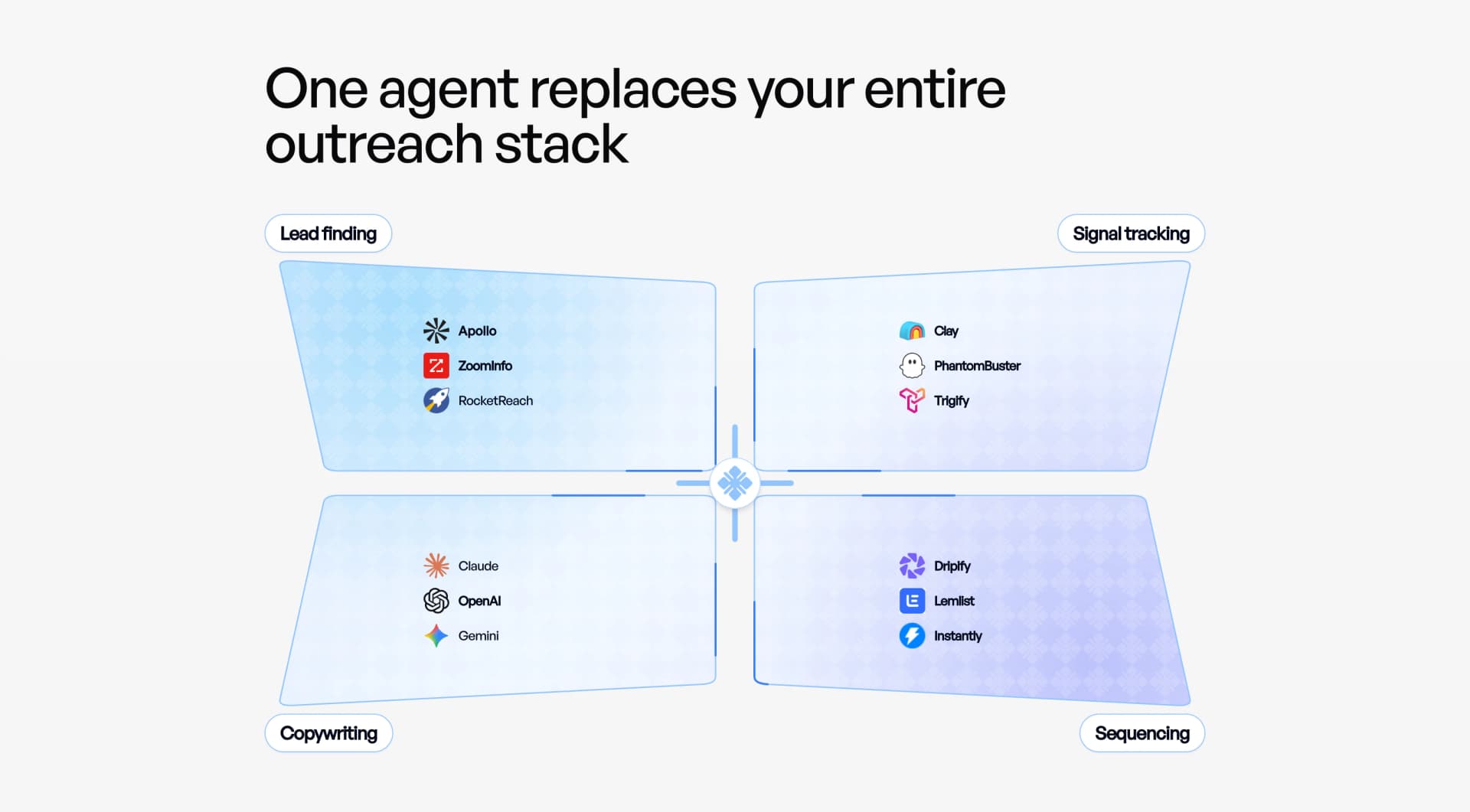
Closely can consolidate several outbound functions, and its public feature grid includes useful controls such as conditional sequences, warmup, analytics, webhooks, and CRM integrations. ColdGenius differentiates on the path into those functions: start from intent and ICP fit, equip the campaign with handled senders, and preserve context when a person replies. That is the difference between automating activity and building a repeatable route to qualified pipeline.
A lower-friction evaluation plan
- Start with one revenue hypothesis. Give ColdGenius your website and define the customer pattern you want to test. Review the resulting ICP and signal criteria before any campaign launches.
- Inspect the first contacts. Check the role, account context, and reason each person belongs in the cohort. This is where intent-led targeting creates a measurable advantage over importing a broad list.
- Approve the narrative. Use manual approval for a high-stakes launch, or automatic approval once your team trusts the campaign rules. Verify that email and LinkedIn touches carry the same useful context.
- Work the replies. Use the unified inbox to route positive conversations and preserve tailored context for the rep who takes over. Track qualified pipeline, not only sends or connection acceptance.
For the strategic layer behind this process, read The 2026 Account Research Blueprint and The 2026 Multichannel Signal Playbook. ColdGenius has also produced $150K in qualified pipeline for RTX and a $10K day-one sale, proof points for the outcome-focused workflow your team is evaluating.
For a clean comparison, measure time to a reviewed launch, percentage of contacts that match the ICP, qualified reply rate, and pipeline sourced. Those measures expose the hidden cost of a list-first process: hours spent enriching names that never become conversations. ColdGenius connects targeting, approvals, and follow-up so your team can improve the full path rather than optimize one sending metric.
Frequently asked questions
Can ColdGenius replace Closely?
Yes, when your goal is a full path from prospect discovery through approved multichannel outreach and reply handling. ColdGenius covers the email and LinkedIn campaign motion, then adds intent-led targeting, managed senders, and contextual follow-up so you do not need to assemble those steps around an automation tool.
Does ColdGenius provide LinkedIn and email outreach?
Yes. ColdGenius coordinates both channels in one campaign, with tailored messaging, sender handling, and approval controls. You can evaluate the audience and message before launch and use the unified inbox when prospects respond.
How does ColdGenius support a team?
ColdGenius gives your team shared campaign visibility, sender accounts handled for you, approvals, enrichment and integrations, and one place to work replies. That keeps strategy, execution, and human follow-up connected instead of assigning each step to a different owner.